
StockTick keeps calculations in code
Waymark's analysts used spreadsheets and close founder guidance for individual client profiles. Moving that work into an AI system meant solving two different problems: finding relevant financial evidence and producing calculations that could be checked.
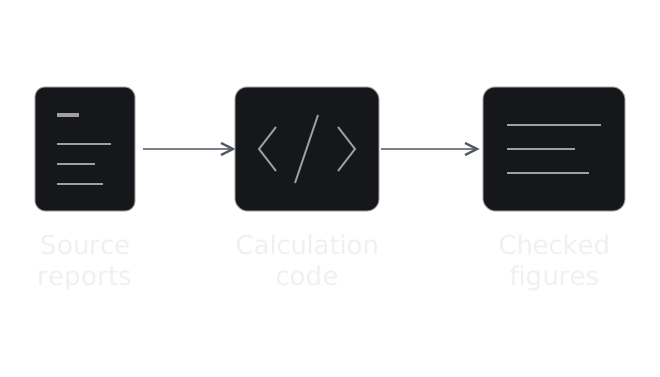
Reports and calculations differ
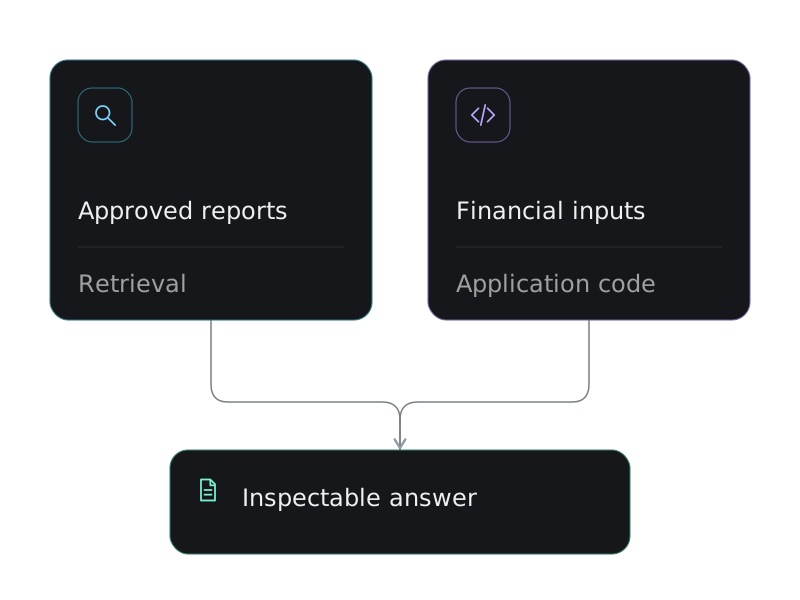
A report supplies evidence. A calculation applies a defined rule to inputs. Putting a report into model context helps with the first job; it does not establish a repeatable calculation path for the second.
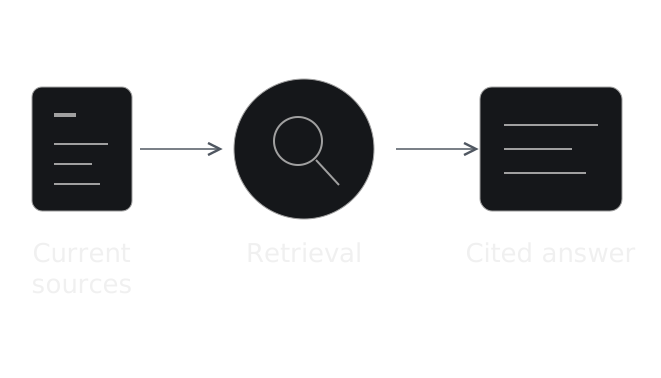
StockTick uses an approved corpus of about 2,000 financial reports, with daily ingestion and Qdrant retrieval in Waymark's AWS environment. Answers cite the reports they draw from, so a reviewer can open the source instead of only the generated text.
Put repeatable financial logic in code
Financial calculations and risk scoring remain in deterministic application logic. For fixed inputs and the same implementation, the output follows the defined rule, a path the engineering team can test separately from the model's wording.
Repeatable code can still repeat a mistake, and a correct calculation can still be described incorrectly. Keeping the two separate makes each one easier to inspect.

Fresh evidence needs its own operating path
Waymark's report collection changes, so the system ingests financial data daily. Retrieval can supply newly ingested material without using model training as the update mechanism.
Freshness depends on ingestion succeeding. Citation quality depends on the selected report supporting the answer. Both are separate checks from whether a calculation used the intended inputs and logic.
What the business result tells us
Waymark reports that daily client analysis moved from 2 to 20 within 90 days against its earlier spreadsheet workflow, through a shared interface covering intake, risk scoring, fund recommendation and projections.
The gain belongs to the whole workflow, so treat it as directional for any single component. What carries over is the separation of responsibilities and the review path it creates.
Six questions before you ship the answer
- Which figures come directly from a source, and which are calculated?
- Can a reviewer open the source used for a factual statement?
- For a calculated result, can the reviewer identify the inputs and the version of the calculation logic?
- Are missing or invalid inputs handled before calculation?
- Does the generated explanation preserve the result, units and qualifications?
- Can source freshness, retrieval quality, calculation correctness and final-answer quality be tested separately?
Related reading
Keep your figures checkable.
Bring the calculations your clients act on and the sources behind them.