
RAG or fine-tuning when data changes daily
When an answer depends on a report published this morning, training on yesterday’s corpus will not supply today’s evidence. Retrieval is usually the starting point; fine-tuning addresses a separate need for consistent task behaviour.
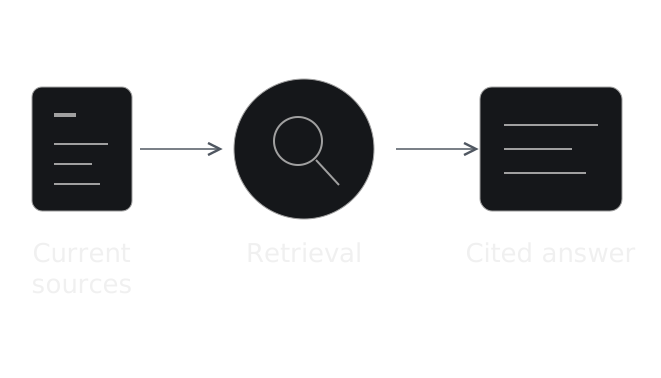
Separate the facts from the task
Retrieval-augmented generation, or RAG, supplies selected source material as context for an answer. Fine-tuning changes a model through additional training, and neither removes the need to test the final answer.
A useful question is whether failures come from missing evidence or from how the model handles evidence it already has. Training it to write a better summary will not fix a policy that never reached it.
What the StockTick system needed
For Waymark’s StockTick work, AURA LOGIC LABS used retrieval over an approved financial-report corpus in the client’s AWS environment. The system ingested reports daily, used Qdrant as its retrieval store and kept calculations outside the language model.
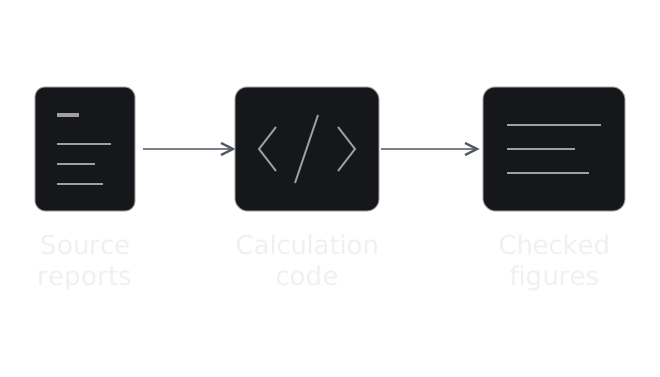
The design kept responsibilities separate: bring the relevant report into the answer, retain an inspectable reference, and calculate figures with deterministic logic. A citation alone does not prove correctness.
Choose the next experiment from the failure
- If answers omit newly published material, inspect ingestion delay, indexing and retrieval before changing the model.
- If answers use the wrong document version, define which source is authoritative and how superseded records are handled.
- If the evidence is correct but the output breaks format, try clearer instructions or task-specific training where your platform supports it.
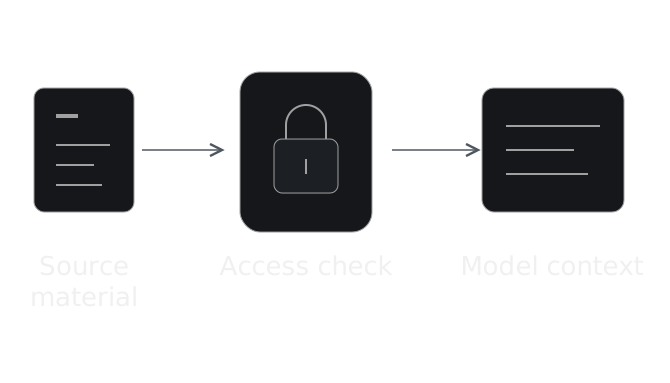
- If different people should see different records, design access enforcement into the retrieval flow. Fine-tuning is not a substitute for that control.
Test freshness separately from answer quality
Build an evaluation set from real questions and expected sources: one whose answer changes after a document update, one with conflicting versions, and one the corpus cannot answer.
Then check retrieval and generation separately: did the right evidence arrive, and did the answer use it accurately? This distinguishes a stale index from a model that misreads a current report.
A practical starting point
Start with a small approved corpus, a clear output requirement and an evaluation baseline. Add retrieval when current or private evidence is needed, and consider fine-tuning only when a measured task failure justifies the work.
For an enterprise deployment, see the permission design guide.
Related reading
Plan retrieval for data that changes daily.
Bring the sources, how often they change and the decision the answer has to support.